

Who is the Holy Spirit?
All genuine believers have the Spirit of God dwelling in them. “Don’t you know that you yourselves are God’s temple and that God’s Spirit dwells in your midst?”(1 Corinthians 3:16). The Holy Spirit lives within each child of God. It is important to know that He is a person, not merely an influence or power.
According to the Bible, God is one God who is three persons. The term “trinity” describes this concept: God is the Father, Son, and Holy Spirit. The Holy Spirit is the third person of the Trinity. When Jesus said we should go into all nations making disciples, the three persons of the Trinity are linked together “in the name of the Father and of the Son and of the Holy Spirit” (Matthew 26;19).
The Bible also tells us in the book of Genesis, “Let us make mankind in our image” (Genesis 1:26). When the world was created, God the Father, God the Son, and God the Holy Spirit worked together to create the earth and all that is in it. The Father, the Son, and the Holy Spirit always were in existence. All are coequal, coeternal members. Although this concept is not easy for us to understand, our God is one essence existing in three distinct persons who share a divine nature—God our Father who is in Heaven, God the Son whom He sent to earth, and God the Holy Spirit who dwells in every believer who has been made spiritually alive through faith in Christ.
The three are not three gods, or three parts or expressions of God, but are three persons so completely united that they form the one true and eternal God.1 God is so great—our finite minds cannot easily understand. It sometimes helps to look at things He has created. In nature, we see things that take different forms and have different effects on our senses, yet are still one.
For example, water has three different forms. It is converted into an invisible vapor—steam—by being heated. Ice is the crystalline form of water made solid by cold temperatures. No matter what its form (water, steam, or ice), it is still water. Although this illustration may help us to understand the idea of God being One—Father, Jesus, Spirit—it is not enough. We cannot fully understand who God is and what He is like based on what we see, hear, or our hands touch. We must put our faith in God Himself. We must choose what to believe about Him based on His Word.
What Does the Holy Spirit Do?
At the time of our salvation, the Holy Spirit delivers us from the hold sin has over us and comes to live within. “You, however, are not in the realm of the flesh but are in the realm of the Spirit, if indeed the Spirit of God lives in you. And if anyone does not have the Spirit of Christ, they do not belong to Christ”(Romans 8:9).
The Holy Spirit not only lives within us but also motivates us to live holy lives by giving us the fruit of the Spirit (love, joy, peace, patience, kindness, goodness, faithfulness, gentleness, and self-control from Galatians 5:22).
Additionally, we can be filled or baptized with the Holy Spirit. We will discover what John the Baptist meant when he said Jesus would baptize us with the Holy Spirit. “I baptize you with water for repentance. But after me comes one who is more powerful than I, whose sandals I am not worthy to carry. He will baptize you with the Holy Spirit and fire” (Matthew 3:11). Since this baptism is sometimes controversial in today’s Christian church, let’s take a careful look at what the Scriptures say.
Receiving the Holy Spirit
The New Testament depicts two distinct yet complementary aspects of receiving the Holy Spirit: the experience of the disciples receiving Him on “Resurrection Sunday,” and the experience they later received on “Pentecost Sunday.” Let’s compare the two experiences.
During Jesus’ last talk with His disciples before His crucifixion, He promised they would receive the Holy Spirit. (see John 14:17) Later, after His resurrection, Jesus visited the disciples and breathed on them, saying, “Receive the Holy Spirit”(John 20:22). At that moment, the disciples were born again by the Holy Spirit, but He made it clear that their experience was still incomplete. In His final words to them before His ascension, He commanded them not to go out and preach immediately, but to go back to Jerusalem and wait there until they were baptized in the Holy Spirit and thus given the power they needed to be effective witnesses. “Do not leave Jerusalem, but wait for the gift my Father promised, which you have heard me speak about. For John baptized with water, but in a few days you will be baptized with the Holy Spirit. . . . You will receive power when the Holy Spirit comes on you; and you will be my witnesses in Jerusalem, and in all Judea and Samaria, and to the ends of the earth” (Acts 1:4–5, 8).
So they prayed and waited. During the festival of Pentecost, 120 were together, and it happened! “When the day of Pentecost came, they were all together in one place. Suddenly a sound like the blowing of a violent wind came from heaven and filled the whole house where they were sitting. They saw what seemed to be tongues of fire that separated and came to rest on each of them. All of them were filled with the Holy Spirit and began to speak in other tongues as the Spirit enabled them.”11 They had received the life of the Holy Spirit a few weeks before when Jesus breathed on them, but this time they were filled.
This distinction between receiving the Holy Spirit at rebirth and being filled with the Holy Spirit is significant. Being filled is the Lord’s provision for releasing the power of the Spirit into the believer’s life.
A Power Encounter
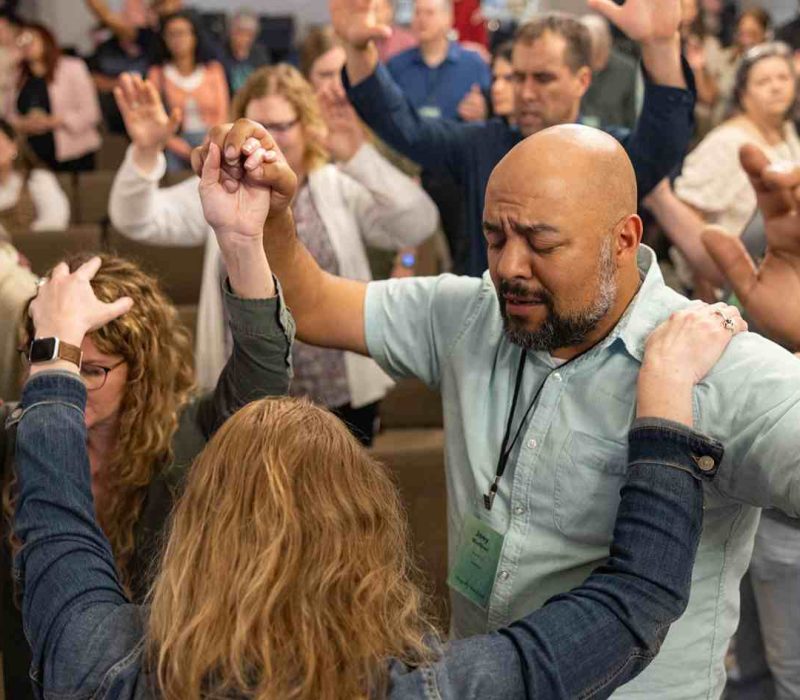
Saul was a devout Jew who was playing havoc with the Christians. In the book of Acts, he was on his way to Damascus to persecute the early Christians when the Lord stopped him in his tracks, blinded him with a bright light, and revealed Himself to Saul. “I am Jesus, whom you are persecuting” (Acts 9:5). Jesus told Saul to go into the city where he would be told what to do. It was in Damascus that a man named Ananias placed his hands on Saul and said, “Brother Saul, the Lord—Jesus, who appeared to you on the road as you were coming here—has sent me so that you may see again and be filled with the Holy Spirit” (Acts 9:17).
Ananias called Saul “brother” because Saul was now a Christian. But it wasn’t until Ananias laid his hands on Saul that he was filled with the Holy Spirit. Some people say that when you’re saved, you are also automatically filled with the Spirit. Although it is possible to receive and be filled with the Holy Spirit at conversion, it is not always so. We see that Saul was filled three days after he received Christ when Ananias laid his hands on him and prayed.
The difference between receiving the Holy Spirit at salvation and being filled with the Holy Spirit can be explained like this: you can be led to a pool of water and drink from it (receive the Holy Spirit at salvation), or you can jump fully into the water (be filled with the Holy Spirit). It’s the same water (Holy Spirit), but you have a completely different experience.
During the late 1800s, evangelist Dwight L. Moody was preaching and saw the same two ladies sitting in the front row night after night. Nearly every night, they came to him after his meetings and said, “Mr. Moody, you need to be filled with the Holy Spirit.” At first he resisted their remarks. However, months later, as he walked down a street in New York City, he had an experience with God and was filled with the Holy Spirit.
The results were amazing! He preached the same sermons, but instead of two or three people coming to faith in Christ at his services, thousands came to know Jesus. In his lifetime, a million people came to Christ because of the power of God in his life. What made the difference? The infilling of the Holy Spirit. He had received power.
The story is told of a man who traveled to a city. Having never experienced the use of electricity, he was fascinated by light bulbs. He took one along home with him and hung it on a string in his home. He became frustrated because it wouldn’t work. A friend explained that it must be plugged into a power source. That’s the way it is with us. To enter into the fullness of what God has planned for our lives, we have no greater need than to be plugged into the power source of the Holy Spirit. Being filled with the Spirit is the gateway into a new dimension of the Spirit’s presence in our lives, empowering us for ministry.
Baptized into the Body of Christ
Sometimes believers confuse being baptized in the Holy Spirit with being baptized into the Body of Christ. 1 Corinthians 12:13 tells us: “For we were all baptized by one Spirit so as to form one body—whether Jews or Gentiles, slave or free—and we were all given the one Spirit to drink.” The word baptize literally means “to put into.” When we’re baptized in water, someone places us into the water. When we’re baptized into the Body of Christ, the Holy Spirit supernaturally places us into the “Body of Christ” or “the family of God.” Jesus is the one who baptizes or fills us with the Holy Spirit.
We Receive by Faith
Just like how salvation comes by faith, so being filled with the Holy Spirit comes by faith. Faith is always a prerequisite for receiving. Galatians 3:14 (NASB) tells us that we “receive the promise of the Spirit through faith.”
Not everyone’s experience will be the same. We can pray and receive the Holy Spirit on our own or have someone pray for us. Some believers have a dynamic, emotional experience at the time of their being filled with the Holy Spirit. They may begin to sing a new song that God gave to them in an unknown language or speak in tongues. Others simply take God at His Word and experience the reality of being filled with the Holy Spirit as a process over the days and weeks that follow.
The type of experience is not of primary importance; the key is that we know by faith in the Word of God that we’ve been filled. We need to know we are filled with the Spirit just as we need to know we have been born again.
It is possible to be baptized in water and in the Holy Spirit at the same time. Or, some may be filled with the Holy Spirit before they are water-baptized. It happened in Acts 10:44–46. Peter was preaching the good news about Jesus to the Gentiles in Cornelius’s home when an amazing phenomenon occurred. “While Peter was still speaking these words, the Holy Spirit came on all who heard the message. The circumcised believers who had come with Peter were astonished that the gift of the Holy Spirit had been poured out even on Gentiles. For they heard them speaking in tongues and praising God.” The people at Cornelius’s house received the Word and were saved. The Lord immediately poured out the Holy Spirit on them in power, thus paralleling the disciples’ experience at Pentecost. Being filled with the Spirit brings the personal boldness and power that we need to be effective.
My Story
I was filled with the Holy Spirit seven years after I received Jesus as my Lord. I could have been filled sooner, but I was ignorant of the Holy Spirit’s work. Although I loved the Lord and was part of a youth ministry, I realized there was something missing in my life. I attended ministries where people were set free from drugs and life-controlling problems, and I realized these people had a spiritual power that I didn’t have.
After studying the Scriptures and being convinced this experience was based on the Word of God, I went out into the woods one day and prayed, “God, I want You to fill me with the Holy Spirit.” Nothing happened. In retrospect, I can see that I didn’t really want anything too radical to happen, so I did not reach out in faith to truly receive. I finally went to a pastor who prayed for me, and by faith I received.
My life immediately took on a whole new dimension of power. Being filled with the Holy Spirit gave me an intense desire to please Him. Before I was filled with the Spirit, I was involved in a ministry where a few people had given their lives to the Lord. After I was filled, everything changed. Hundreds of young people gave their lives to Christ during the next few years. I knew that it wasn’t anything that I was doing in my own strength. It was the Holy Spirit’s power.
Although it took me several years from the time I was saved until I was filled with the Holy Spirit, I believe it is God’s will that we are born again and immediately receive the infilling of the Holy Spirit and the power of God in our lives. Acts 2:38–39 says the infilling of the Holy Spirit was not just for those at Pentecost, but for all who would believe in Christ throughout this age. “And you will receive the gift of the Holy Spirit. The promise is for you and your children and for all who are far off.”
Receiving God’s Good Gift
Some might ask, “Do I really have to be filled with the Holy Spirit?”
My reply is, “Do you really need to have all of God’s power so you can help other people find Jesus?” People all around us are going to hell. We need God’s power so He can fulfill His purpose for us!
I often explain the power of the Holy Spirit like this. If you mow a lawn, you can do it with a scissors or with a lawn mower. It’s your decision. You don’t have to be filled with the Holy Spirit to be a Christian, but like using the mower, God wants us to be effective. The early disciples of Jesus made being filled with the Spirit a requirement for anyone who was to be set apart for responsibilities in the church. “Brothers and sisters, choose seven men from among you who are known to be full of the Spirit and wisdom. We will turn this responsibility over to them”(Acts 6:3).
The effectiveness of a Christian’s witness increases because of a strengthening relationship with the Father, Son, and Holy Spirit that comes from being filled with the Spirit. The Holy Spirit makes the personal presence of Jesus more real to us.
A survey was taken in the Philippines which found that each Christian who had been filled with the Holy Spirit brought 36 people to Christ compared to the one person led to the Lord by each Christian who had not been filled. Why? The Spirit-filled Christians simply had the power of God to witness with greater effect.
Some sincere believers have heard negative things about “Spirit-filled” people. So have I. But we live by the Word of God, not by other people’s experiences. We may see something happen in the name of the Holy Spirit that may not be Him at all and think, “If that’s the Holy Spirit, I want nothing to do with it.” But we cannot throw out being filled with the Spirit because of what we saw or experienced that was not authentic.
Others may say, “If I’m supposed to be filled with the Spirit, that’s up to God. I’m open to whatever the Lord wants to do.” This sounds like a noble response, but in reality, it may be a statement of unbelief. As in salvation, we receive by faith, not by saying “we are open.”
God has already initiated His part in our (1) receiving Christ and (2) being filled with the Holy Spirit. It’s now up to us to receive by faith what He has freely offered. To be filled with the Spirit is a personal act of faith, a decision we make. Our heavenly Father wants to give us this gift. “If you then, though you are evil, know how to give good gifts to your children, how much more will your Father in heaven give the Holy Spirit to those who ask him!”(Luke 11:13)
Suppose I gave you a gift and you opened it and found many gifts inside. One is a tool you needed: a screw driver. You must take it out and use it for it to be effective. The same principle applies to the Spirit. We need to receive the gift of the Holy Spirit by faith, and then begin to use all the wonderful individual spiritual gifts that accompany it.
What about Spiritual Languages?
In Ephesus, some of the believers had never even heard of the Holy Spirit. So Paul told them how they could receive the Holy Spirit. When he prayed for them, the Holy Spirit came upon them and they spoke in spiritual languages. “When Paul placed his hands on them, the Holy Spirit came on them, and they spoke in tongues” (Acts 19:6).
There are nine supernatural gifts of the Spirit listed in 1 Corinthians 12:7–10. The gift of tongues or spiritual languages is one of them. “Now to each one the manifestation of the Spirit is given for the common good. To one there is given through the Spirit the message of wisdom, to another the message of knowledge by means of the same Spirit, to another faith by the same Spirit, to another gifts of healing by that one Spirit, to another miraculous powers, to another prophecy, to another distinguishing between spirits, to another speaking in different kinds of tongues, and to still another the interpretation of tongues” (emphasis added).
Often, when believers are filled with the Holy Spirit, they begin to speak in tongues, or a new heavenly language. The Bible says they magnify God.17 This personal prayer language is understood by God because it is my spirit speaking to God. Speaking in a spiritual language is a direct line of communication between me and God.
In the book of Acts, speaking in tongues was often the initial outward sign accompanying the infilling of the Holy Spirit.18 Should every Spirit-filled believer speak in a spiritual language? You don’t have to, but you may! Praying in tongues is a blessing from God. Let’s imagine that you came to my home and I gave you a meal. You say, “Must I eat this steak?” Well, no, you don’t have to, but it is available for you as part of the whole meal deal!
Charging Your Spiritual Battery
God wants us to have spiritual gifts so that we may be a blessing to others. We need to exercise them so they can be used in our lives to build us up spiritually to give us supernatural strength to be effective. 1 Corinthians 14:1 (ESV) tells us to “eagerly desire spiritual gifts.” Jude 20 (NCB) says, “Build yourselves up in your most holy faith and pray in the Holy Spirit.”
God wants us to build ourselves up in faith so we may be His witnesses. In Acts 1:8 we read that when the Holy Spirit comes upon us, we will receive power to be His witnesses. That’s why we receive power—to be His witnesses. Praying in tongues builds us up spiritually. It’s like charging your spiritual battery. You can, with power, pray for the sick and minister to people and help them as you continue to build up yourself spiritually by praying in a spiritual language.
Speaking in tongues has been controversial in some parts of the church. One of the first times that I went to a public meeting where I was told that some of the people spoke in tongues, I sat near the back of the building so I could make a quick exit if I became uncomfortable! Although some believers hesitate because they have heard or seen misuses of the gift of tongues or other gifts of the Spirit, we have no need to be afraid.
One of the fears that I had when I was considering being filled with the Spirit was that I would be in a place like a store and the Spirit would come on me. I was afraid I’d begin to speak uncontrollably. Then I read this scripture: “The spirits of prophets are subject to the control of prophets.”19 Your spirit is subject to you. It’s like a water spigot. You turn it off and on. The water is always there, but it’s under your control. You choose to pray or not to pray in tongues at any given time, but it’s God who gives you the gift and the power to speak.
Bypassing the devil
We pray two ways: with our mind and with our spirit. Both are needed, and both are under the influence of the Holy Spirit, according to 1 Corinthians 14:14–15. “If I pray in a different language, my spirit is praying, but my mind does nothing. So what should I do? I will pray with my spirit, but I will also pray with my mind. I will sing with my spirit, but I will also sing with my mind.”
The first way we pray is with our mind. When we pray, “Our Father in heaven,” it’s coming from our mind. We understand it. We are using our intellect to pray in a learned language.
The second way we pray is with our spirit. When we pray with our spirit (in tongues), it’s unfruitful to our mind. Our spirit is praying directly to the Father without having to accept the limitations of our human intellect.
In other words, when we pray with our spirit, we have no idea what we are saying, but our heavenly Father understands our words. We come in simple faith and trust God to provide the words and their meaning to Him. Using our new language, we edify ourselves or “build ourselves up” spiritually. (1 Corinthians 14:4) It is like a direct contact line to God.
I pray in tongues daily, because when I pray in my spiritual language, I bypass the devil. He has no idea what I’m saying. I’m speaking the “language of angels” and “mysteries” according to God’s Word. (1 Corinthians 13:1; 14:2)
How important is it for us as Christians to speak in spiritual languages and exercise other spiritual gifts? Paul the Apostle wished that every person spoke in tongues and stressed that the gift of tongues was an important part of his spiritual life. “I would like every one of you to speak in tongues. . . . I thank God that I speak in tongues more than all of you” (1 Corinthians 14:5; 14:18)
Is someone a second-rate Christian if they don’t speak in a spiritual language? No, of course not! But God wants us to be blessed and use these blessings so we can fulfill His call on our lives. Some say they believe it is selfish to pray in tongues. Is it selfish to pray? Is it selfish to read the Bible? Why do we pray and read the Scriptures and speak in spiritual languages? We do it to communicate with God and in order to be built up spiritually so we can be effective in helping other people.
Common Misconceptions
To clarify common misconceptions, let’s look at two different kinds of tongues mentioned in God’s Word. The kind discussed so far is for personal prayer and intercession. This type of tongues magnifies God and is a direct line of communication between us and God. It is God speaking through us. “In the same way, the Spirit helps us in our weakness. We do not know what we ought to pray for, but the Spirit himself intercedes for us through wordless groans. And he who searches our hearts knows the mind of the Spirit, because the Spirit intercedes for God’s people in accordance with the will of God” (Romans 8:26–27).
P.C. Nelson, founder of the Southwestern Bible Institute, was a Greek scholar. He said the Greek literally reads, “The Holy Spirit makes intercession for us with groanings which cannot be uttered in articulate speech” (the ordinary kind of speech). He pointed out that the Greek bears out that this not only includes “groanings” in prayer but also “other tongues.”2 The Bible tells us that the Holy Spirit helps us to pray. Many times I have felt unable to put into words the desires of my heart when I pray. Sometimes, situations are complex and I don’t know how to pray. The Holy Spirit does!
The second type is mentioned in 1 Corinthians 12:28–30 after God says He has appointed some in the church for various tasks and responsibilities. “And God has placed in the church first of all apostles, second prophets, third teachers, then miracles, then gifts of healing, of helping, of guidance, and of different kinds of tongues. Are all apostles? Are all prophets? Are all teachers? Do all work miracles? Do all have gifts of healing? Do all speak in tongues? Do all interpret?”
Because this scripture states, “Do all speak in tongues?” many think this means not all can speak in tongues as a personal prayer language. However, this scripture is really asking, “Are all appointed to speak with the gift of tongues to the church?”
There is a gift to be used in the church which is a type of speaking in tongues. It is different from the type we experience when we pray in our prayer language. When this gift of tongues is used in the church, someone who has the gift gives a message in tongues, and someone with the gift of interpretation gives the meaning, thus building up the Body of Christ.
To summarize, although all Christians may speak in tongues so we can be built up spiritually to serve God better, He also sometimes gives a special gift of tongues to be used to build up His church. These scriptures are clear that not all will be used by God to speak in tongues in a church meeting; however, we can still pray in tongues as a personal prayer language to the Lord. The same goes for the other gifts listed here. You and I may not have the gift of administration, but we all must administer our finances. We may not have the gift of healing, but we are all called to pray for the sick in our families.
After Paul lists the ministry gifts of the Holy Spirit to the church, in 1 Corinthians 12:28–30, he says in verse 31, “Now eagerly desire the greater gifts. And yet I will show you the most excellent way.”
What is the greater gift? It depends on the situation you’re in. If you need healing, you believe God for the “greater” gift of healing because that is what you need.
What is the “most excellent way”? It is love. Chapter 13 of 1 Corinthians tells us all about it! Some say they don’t need all these gifts; they just need love. That’s not what Paul was trying to communicate. He is emphasizing that to possess spiritual gifts without love amounts to nothing. We need to use these gifts in love.
This chapter also reveals that tongues will cease when “perfection comes.”25 Some people believe that this means tongues are no longer needed today. They believe that “when perfection comes” refers to the Bible. They fail to realize that the same passage says we shall see “face to face.” We will not see the Bible face to face. We will see Jesus face to face. At that time, at the end of the age, there will be no need for the gift of tongues. But until we see Jesus face to face, the Lord has given us the gifts of tongues, prophecy, and other supernatural gifts of the Holy Spirit to use for His glory here on earth.
Continue to be Filled
Do you know for sure that you are filled with the Holy Spirit? Are the spiritual gifts becoming evident? If you are not sure, ask Jesus to fill you with His precious Spirit today. Ask another Spirit-filled believer to pray for you. Sometimes it takes someone else to agree with us in faith to experience the Spirit’s filling. Paul went to Ananias. The Samaritans waited for Peter and John. I went to a pastor friend.
We must reach out and receive the promise of the Spirit. By faith we receive, and then are continually filled, day by day! Dwight L. Moody said, “I need to be filled with the Holy Spirit every day, because I leak!”
The Greek verb tense used in Ephesians 5:18, “be filled with the Spirit,” does not mean “be filled” once and for all, but means that we should continue to be filled with the Holy Spirit again and again.
The early believers knew this, too. “After they prayed, the place where they were meeting was shaken. And they were all filled with the Holy Spirit and spoke the word of God boldly” (Acts 4:31). Many of these believers were already filled with the Holy Spirit at Pentecost in Acts 2. But they needed to be filled again. We, too, must experience constant renewal. Paul warns the believers that to maintain the fullness of the Spirit, they must live lives separate from sin. “Do not get drunk on wine, which leads to debauchery. Instead, be filled with the Spirit”(Ephesians 5:18).
Being filled with the Holy Spirit happens in the context of committed discipleship to Christ. Our hearts must be right with God, and as we live in obedience to Christ, there will be a greater awareness and presence of the Holy Spirit. We will deepen our relationship with the Father and grow in our love for others.
God wants to use you to see change come into people’s lives for eternity. But it takes the Holy Spirit’s power to “break through.” People in your family will be changed when you are filled with the Holy Spirit. It won’t be through your natural ability, but by Christ who is at work in you through the Holy Spirit. God bless you as you live by the power of God and experience the Holy Spirit flowing through your life.
Steps to Being Filled with the Holy Spirit
- Realize that every believer has the Holy Spirit living in him or her (Rom. 8:9; 1 Cor. 3:16).
- Recognize the difference between having the Holy Spirit living in us and being filled with the Holy Spirit (John 20:22; Acts 2:1–4).
- Being filled with the Holy Spirit gives us spiritual power (Acts 1:8). The most common evidence of being filled with the Holy Spirit is prophesying—proclaiming the truth, and speaking in tongues—speaking in a heavenly language (Acts chapters 2, 4, 8, 9, 10, 19; 1 Cor. 14:14–15).
- God gives the Holy Spirit to those who ask Him (Galations 3:14; Luke 11:11–13).
- People in the Bible often received the Holy Spirit through the laying on of hands (Acts 9:17; 19:1–7).
- When we receive the Holy Spirit, we receive this gift with the understanding that nine spiritual gifts are contained within this one gift, and God will teach us how to use each of these individual gifts (1 Corinthians 12:7–10).
- We need to be filled with the Holy Spirit again and again because we leak! (Acts 4:31; Ephesians 5:18).
Notes
1. Full Life Study Bible, NIV (Life Publishers International, 1992), 1479.
2. Kenneth Hagin, Seven Vital Steps to Receiving the Holy Spirit (Faith Library Publications, 1980), 10.
More About Walking with God
Larry Kreider has many materials to help you walk with God.